
Meet the ISTN-3 Grads: Dane Rivas-Koehl
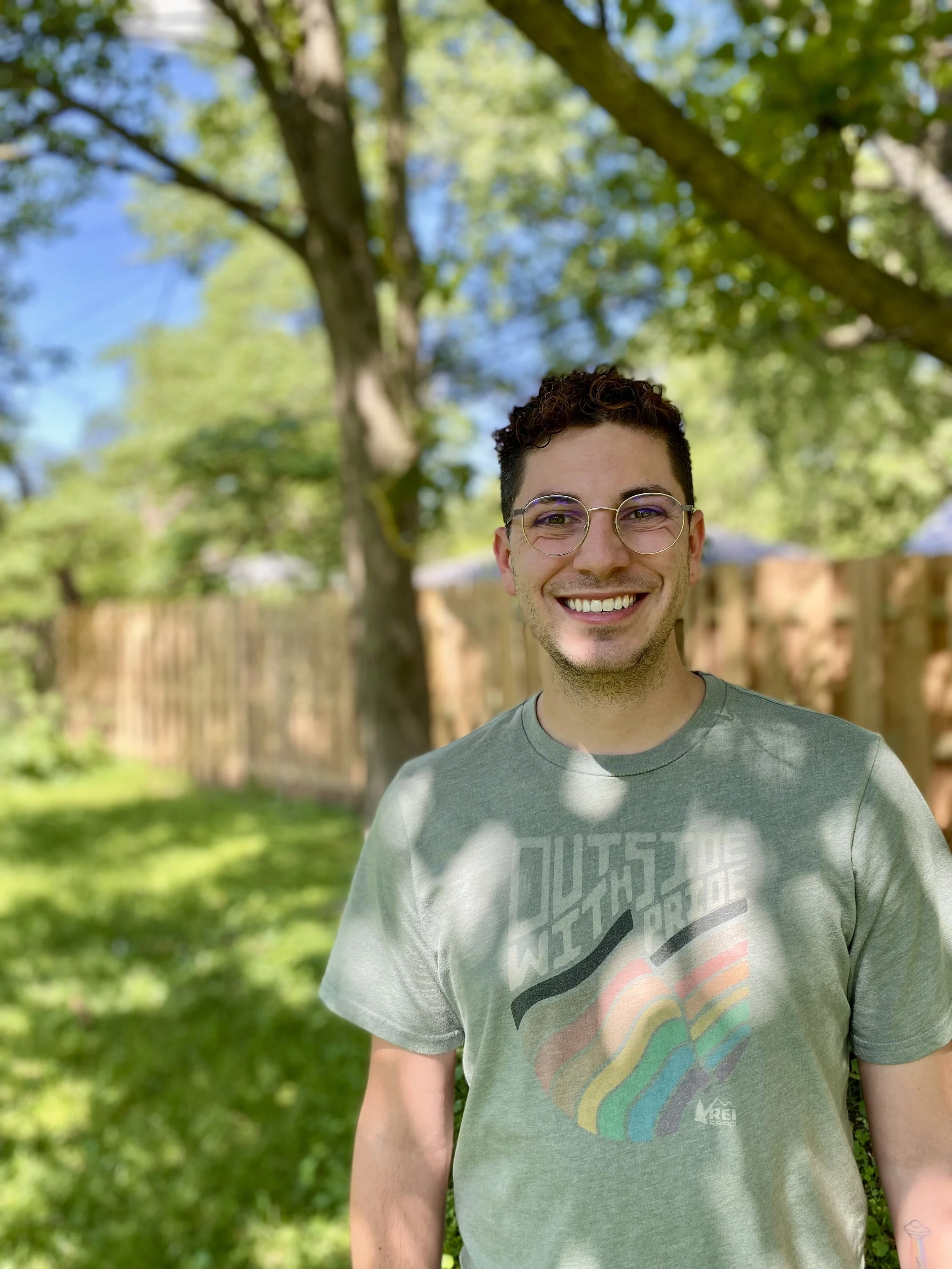
Dane Rivas - Koehl (he/him) is a Ph.D. student in Human Development and Family Studies at the University of Illinois Urbana - Champaign. Dane holds a master’s degree from Texas Tech University in Human Development and Family Sciences and a bachelor’s degree in Agricultural Communications. His primary work focuses on understanding the lives of LGBTQ+ families and individuals from intersectional, feminist, and queer-theorized lenses to work towards applied impact in communities. We talked to Dane about his experience with ISTN.
Where and what are you currently studying?
I am a fourth-year doctoral student at the University of Illinois. Urbana-Champaign, studying Human Development and Family Studies. My specific research interests is at the intersection of gender, sexuality, class and other sorts of identity aspects that influence the health and well-being of LGBTQ+ individuals and families, and how to promote thriving and resiliency for LGBT LGBTQ plus individuals and families. Right now, of course, my specific focus is on queer youth.
Where did your interest in doing research with LGBTQ+ populations begin?
Oh, that's a story. I grew up in a very small town in Texas of about 1,400 people andgrowing up as a closeted gay kid was a really stressful — as we know through research — but also personal experiences hiding identity, navigating identity, trying to figure out what it actually means to be a queer person not only in my family, but also in Texas, and in the broader US context, which is a lot to do, especially when there wasn't a lot of queer visibility around me, within my family, or within the community. So, that's kind of the positionality that I come from with this.
My undergrad was in agricultural communications from Texas Tech University, and whenever I was thinking about grad school, I wanted to do a master's and study how we market our content through an agricultural lens to children. And my partner was a Human Development and Family Sciences major at Texas Tech, and he was applying for master's programs and PhD programs. He’s like, “Well, if you want to study kids, you should just come over to HDFS,” and it was there that I was introduced to actually studying people and the experiences of people. Through that, I kind of got introduced to studying my own experiences and what was happening. So I wanted to study how parents talk to their children about gender development, how gender stereotypes are like throughout the entire developmental process, and how parents, even if they have feminist or egalitarian beliefs, can perpetuate stereotypes, which led me to be introduced to feminist and queer theories.
I read a lot of gender- and sexuality based developmental works and really got interested in what it's like for queer people to exist in the world. As I was reading, I noticed there was a lot of deficit approach research, which is needed, but I wanted to take a different approach and focus on what the strengths are of being LGBTQ+, and what the strengths of queer families is, what the strengths of queer people are, and help to identify what builds resiliency, what helps to facilitate coping and social support, what leads to positive mental health, what leads to thriving, and flip the script. I wanted my research to show that being LGBTQ+ is not automatically associated with adverse mental health outcomes, which is what a lot of my work has tried to do.
What has your experience been in the ISTN? How has it impacted your research and scholarship?
ISTN kind of just fell into my lap. I think my advisor was on an email list and sent to me. I had not heard of ISTN before, but when I saw it, I was like, “Oh my gosh, this is perfect!” No one in my department does work on queer youth and I don't have any mentors who are looking specifically on queer youth that I'm close with, so this would be amazing to like get this training to see how people are talking about it, to see how people are theorizing and creating projects about it, and how they navigate parental consent, because I didn't know how to navigate that when it came to creating my own studies with queer youth.
The ISTN was really great for gaining the language and skills — like knowing what to say to people when they say, “Well, why aren't you doing parental consent with queer youth?” and it's like, “Well, we don't want to out them. We want to reduce the harm that can be done as much as we can, so we don't want to potentially out them if they're not out to individuals yet or aren't ready to come out.” It has been cool to get a global perspective on queer youth. Growing up in the United States and going to schools in the United States, it's a very Western view of what it looks like to be queer and what it looks like to develop as a queer person. Even just going down into Mexico, there's not a word that translates to queer. It's so globally divided in the work, and so being able to see this global fusion of what it means to study LGBTQ+ youth from a global perspective was really amazing and something that is now fundamental in the way I think. There's a model that my husband and I published that's expanding minority stress theory. We took it from a global perspective, wanting this model to be able to be used in different cultural contexts and different historical contexts to understand what's happening for LGBTQ+ youth, because minority stress theory had its limitations in that it wasn't able to do that. ISTN helped shape that sort of perspective in my thinking.
And just seeing that you're not alone in doing this work. It can be so, like, draining sometimes to think that you're the only one who wants to focus on thriving, or all the other work you're seeing people are so far ahead of you already. How can you even be part of this? Seeing all the other mentees in ISTN going through this too, asking the same sort of questions you have, thinking about things the same way you are, and still trying to problem-solve in the way that you are, is very refreshing. It’s great to know that you're not alone and that there are people all over the world who are asking these questions and wanting to do things you're doing and that you can work with these people too.
What are some key takeaways or benefits from ISTN that you'll take into your future work?
I think some of the most fundamental key takeaways are the language that we use to talk about LGBTQ+ youth. Like, instead of saying gender or sexually marginalized, placing the onus back on society rather than placing it on the youth. Or what it means to be marginalized in a society — just because someone identifies as LGBTQ+ doesn't mean that their identity is the minority. It means that society marginalizes them. So, flipping the script, moving away from the deficit approach even in how we use language, how we set up studies that are youth-centred. Rather than traditional surveys that are 130 questions long — that even I, as a doctoral student, have the attention span of a flea — I don't want to finish those! Why would we think youth want to finish something that long that's not engaging and isn't worded in their language? So, instead, using our digital technologies to actually recruit youth in the way they are, ask them questions in the way they understand them, and be able to argue for why we need to do that in a positivist research culture that favors rigor and traditionalism when it comes to survey work, specifically, and is even more critical of qualitative work. It's amazing to have these tools, resources, and people to use to help argue for why we need to center youth in our work and center their experiences and their wording when we're thinking about how to do these studies.
We’ve seen an immense rise in hate against queer and trans communities, globally, and particularly in the United States. Has your work been impacted by this context? And how have you found ways, as a researcher, to support yourself amid this?
I guess I'll start with the fact that I identify as a critical feminist, queer scholar whose work is based around an intersectional perspective. So, thinking about these policies, how to critique them, and what is happening with them is fundamental in my research, theorizing, the way I think and read research — it can't be parsed apart. You can't take a person out of their context and study what their mental or physical health is. Their context is the most pivotal part of their experiences, because it shapes the aspects of their life that they live in and their day-to-day interactions. Even in ultra liberal places, like where I live right now in Urbana-Champaign, you can become blind to the privileges that you have. Just yesterday, my husband and I were walking in a park holding hands, and someone drove by and yelled out the F word at us — this context is so important to remember.
In my research that I have done in the past with my lab that is working on looking at queer farmers in America, we categorized every state based on data from the Advancement Project, from no support to high support, and looked to see what mental health outcomes are for people in states based on the support that exists on the political spectrum. For my current dissertation, I'm doing a similar thing, but focusing on queer youth using seven secondary data sources. So I'm using the Movement Advancement Project from 2022 to code every state on overall protections for LGBTQ+ youth from negative to high, and then splitting it by sexual and gender identity. Because one, those are two distinct identities for queer youth, and two, those can shape and impact mental health and the way youth show up in many different ways — so, it's important to understand what is happening. You can collect the data, but it’s also important to place the data in context. It's important to identify that this context exists and that these adverse mental health outcomes can be associated with these negative or positive climates that youth are existing in, because their entire life exists within this context — from their family life to their school life to their interpersonal connections with their friends and friends, to getting jobs, to going to universities for schooling — it all matters.
And then for your second question on what I do [to support myself]? I have tried really hard not to work on the weekends. My husband and I are both in the same doctoral program, so we both understand what each other is going through. We both have the same sort of training from our master's program, and the same training here. So, we understand the stressors that each other has and, on the weekends, we try to just be people and not researchers. And I also have a good network. As I mentioned, my husband, and also my advisor, is part of the queer community. They are really, really amazing. We have game nights. We talk about queer joy a lot. Our whole office on campus is decorated with rainbow streamers. We have pride flags on the wall. We have all of our posters that we've done hung up that celebrate what we've done. Lots of different things to remind you that you're a person, that you can take time for yourself, and we can lean on each other when we need to. I think that's the biggest thing.
Is there anything else you would like to add?
Just that I think as scholars, as queer people, as queer scholars, we need to remember that we have our own intersectional identities that are distinct from each other, but interact at all times. In my head, it's impossible to do objective work, and our identities always influence how we ask questions, how we do things, how we do analyses, and how we interpret the data. It's important to remember that, because it guides our research, how we disseminate it, how we read it, but also how we take care of ourselves, think about ourselves, think about what burnout feels like, what overload feels like, when it is just too emotionally heavy to be doing this work, when you need to take a step back, and that it’s okay to do that. I think that's something that is often forgotten, and queer people and scholars are the ones that I feel like need to hear it the most. It’s okay to look to other people to ask: “Okay, I need help. I need to take time.” We need to be our own self-advocates.